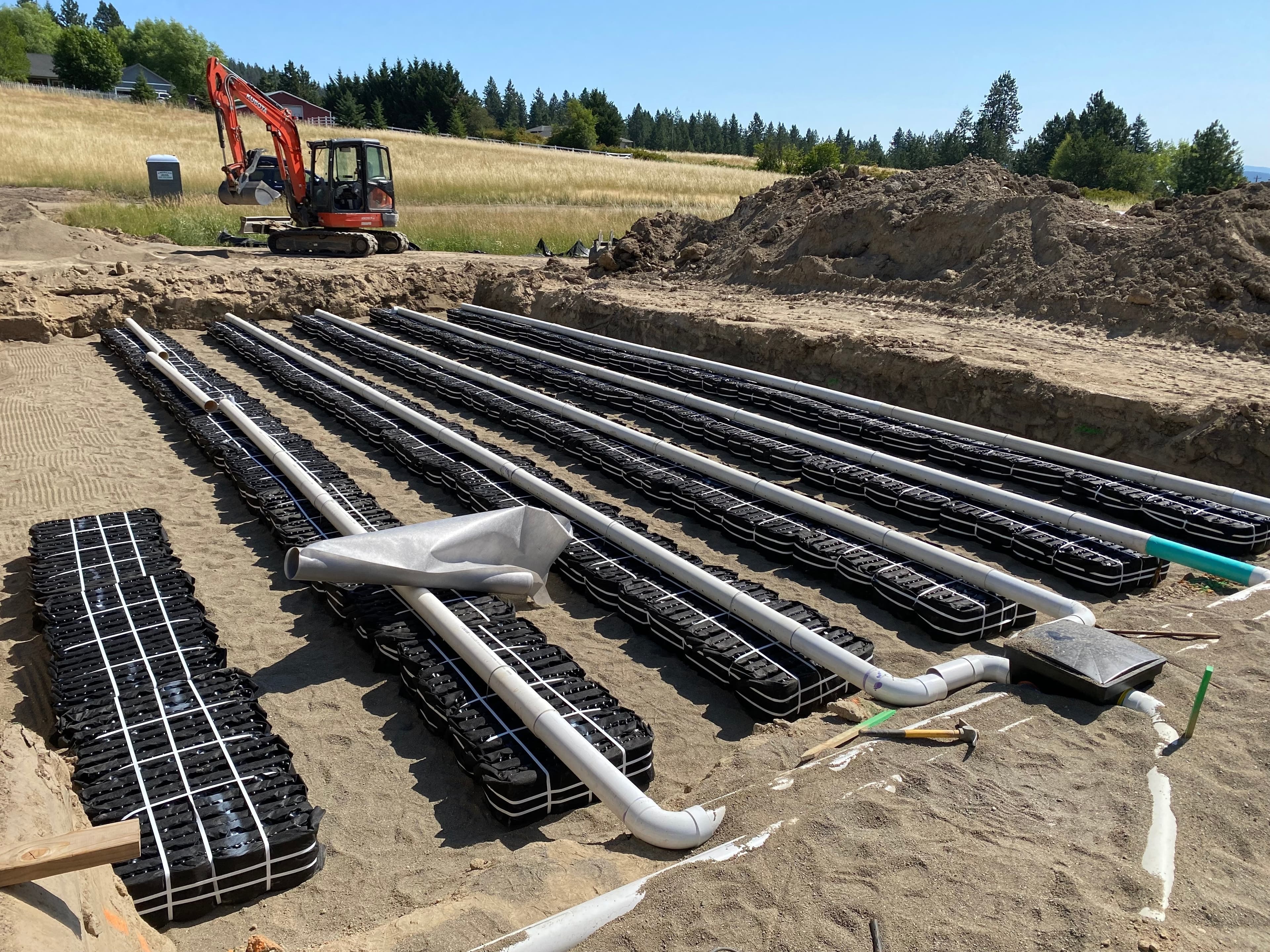
Coeur d'Alene, ID — bed design example.
Photo: R.C. Worst — December 2021 install roundup.
Alternative drainfield supply across Southwest Idaho
Drainage systems overview
DAG Supply works on advanced drainfield projects where a conventional solution is not the answer. We supply materials and keep product requirements clear.
Good fit when
DAG Supply helps source materials for the Eljen Geotextile Sand Filter (GSF) system, an advanced alternative leachfield solution. Manufacturer details at eljen.com
Eljen system photos
Five Idaho installs from R.C. Worst's Eljen roundup (December 2021). Each scenario shows typical module beds, trenches, shoreline setbacks, or tight contours DAG supports with materials.
Coeur d'Alene, ID — bed design example.
Photo: R.C. Worst — December 2021 install roundup.
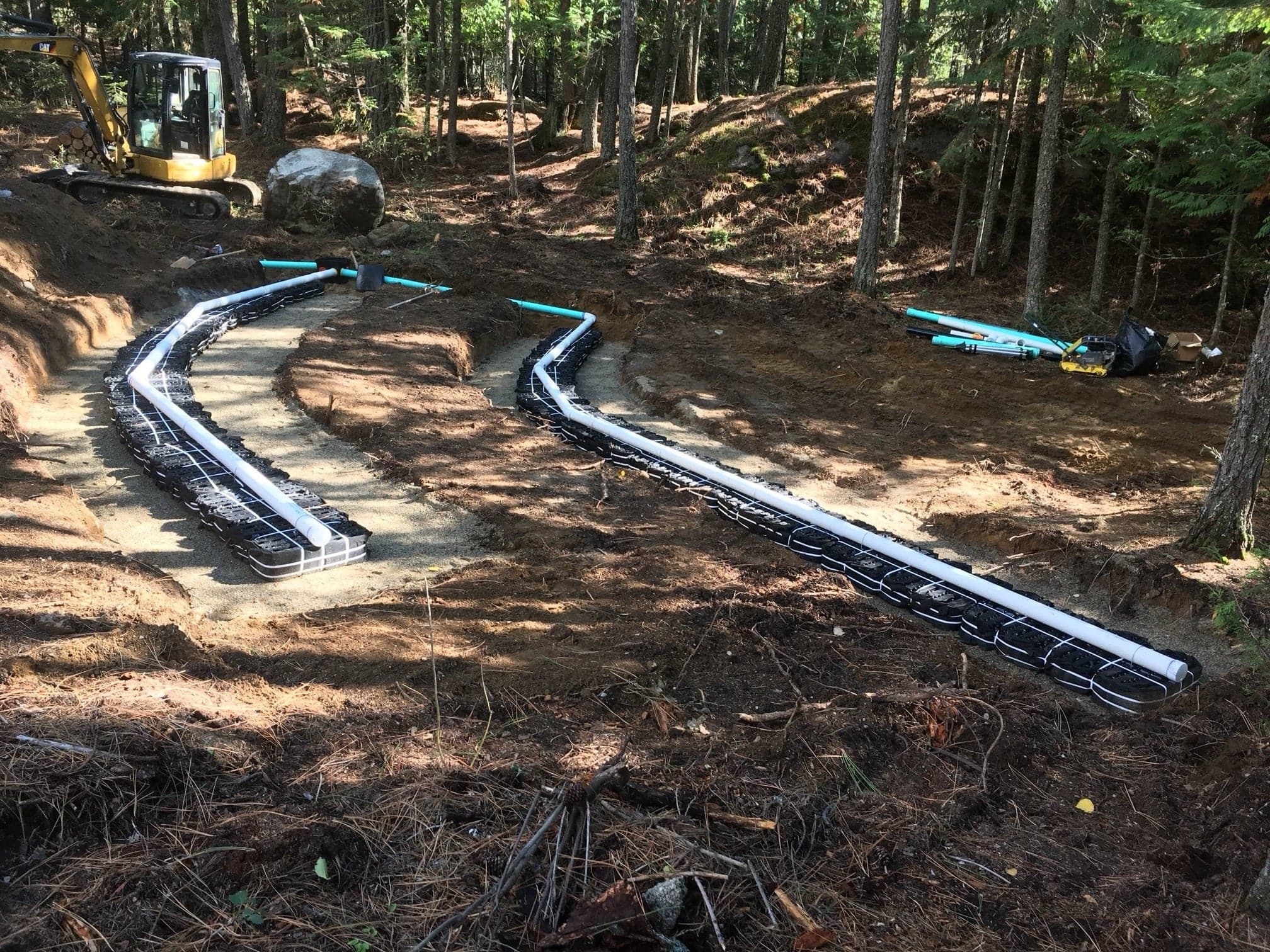
Sandpoint, ID — trenches wrapping to the lay of the land.
Photo: R.C. Worst — December 2021 install roundup.
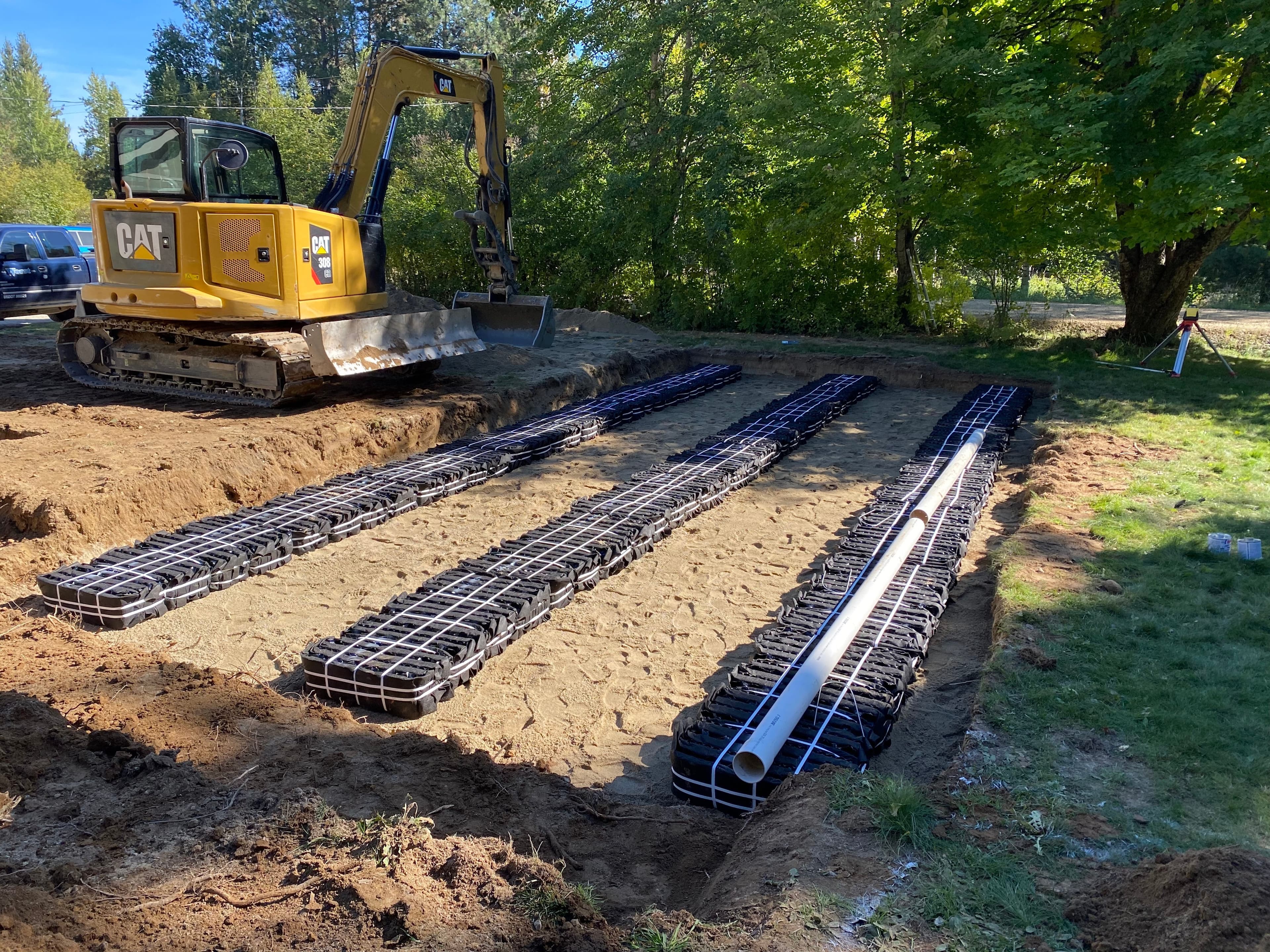
Sandpoint, ID — bed install.
Photo: R.C. Worst — December 2021 install roundup.
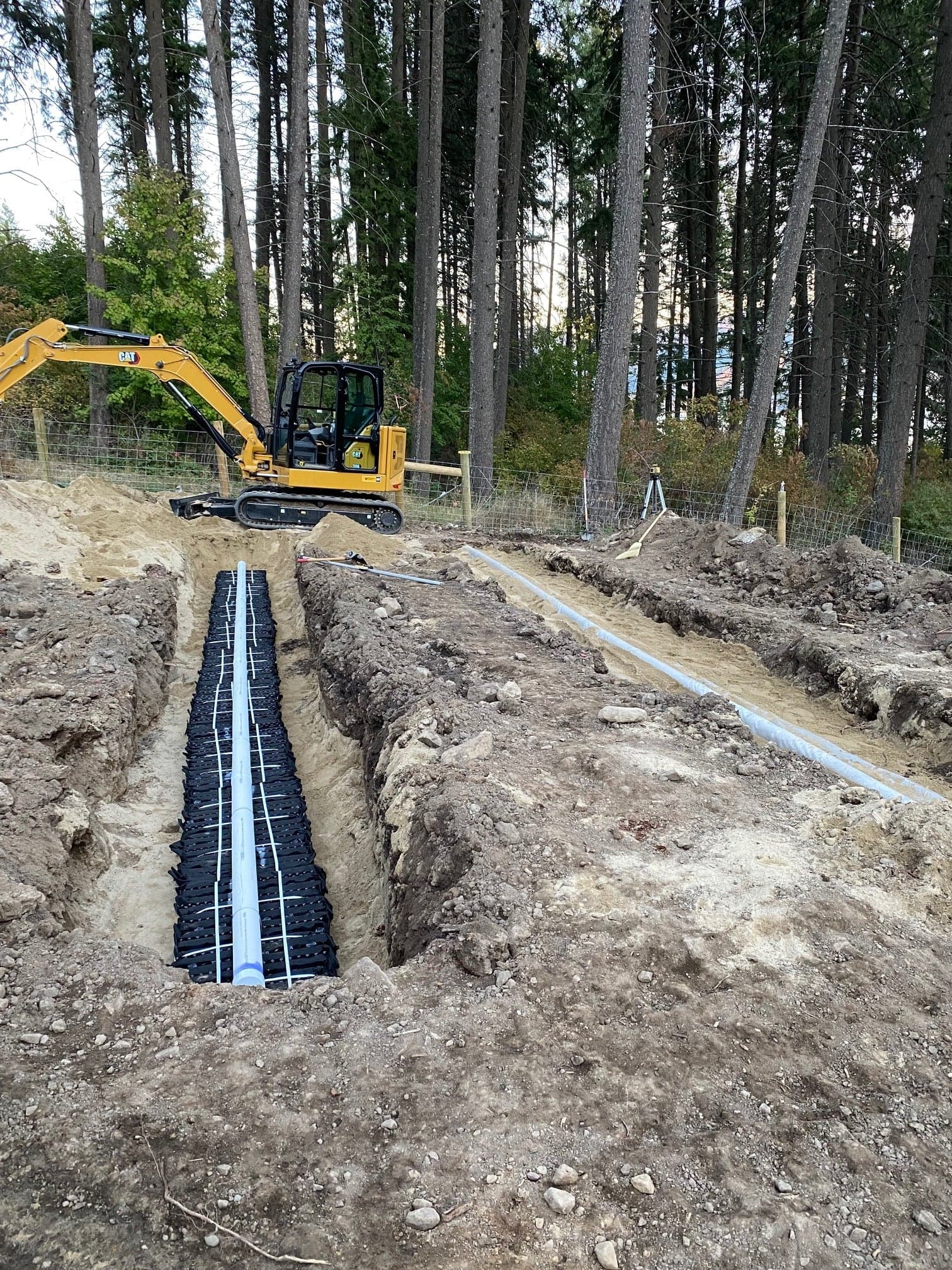
Bayview, ID — trench install at a lakeside property.
Photo: R.C. Worst — December 2021 install roundup.
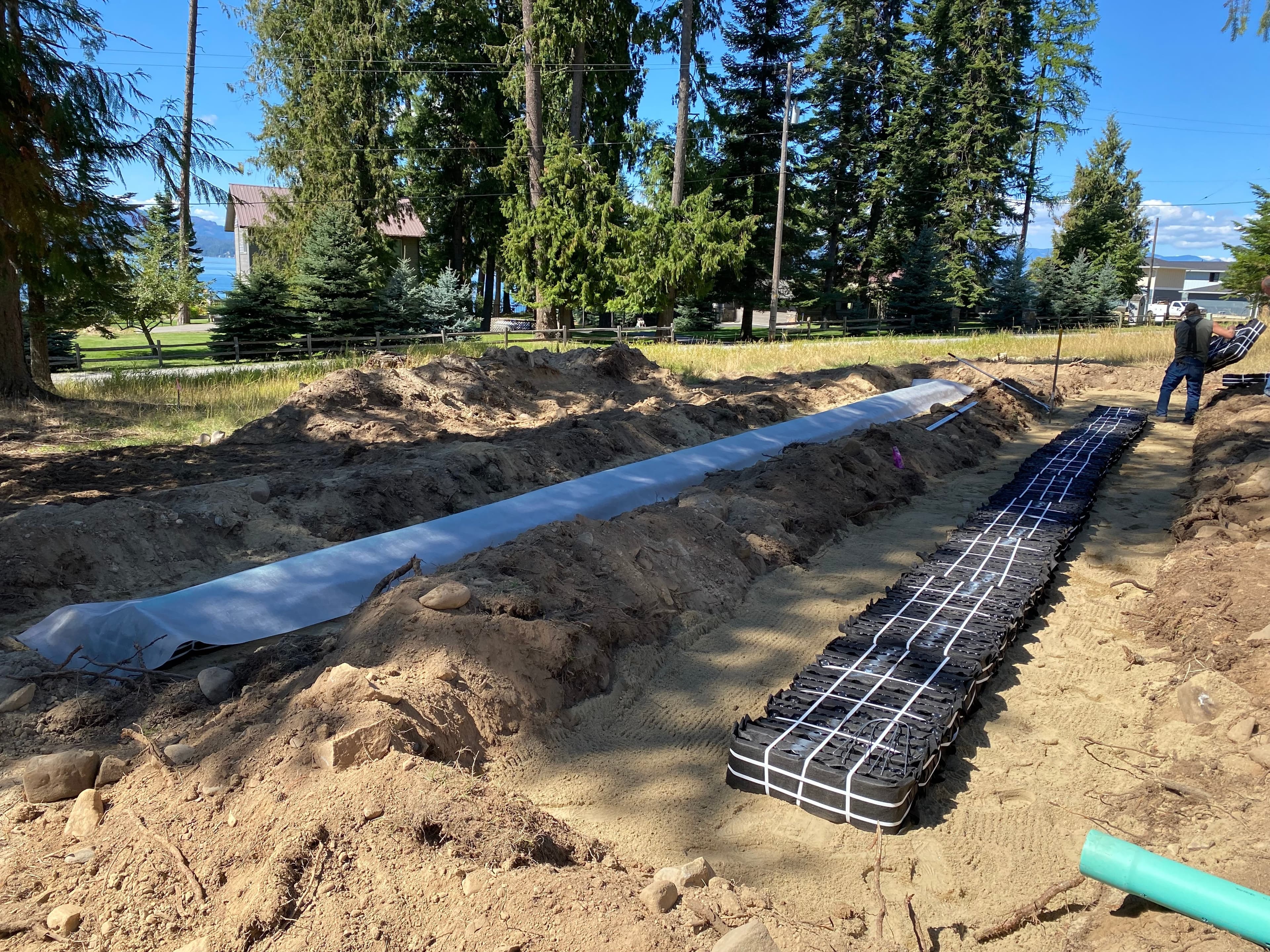
Hope, ID — lakeside-context install.
Photo: R.C. Worst — December 2021 install roundup.
When this kind of system is used
Sites with tight layouts, restrictive soil conditions, or other physical limitations often need an alternative approach instead of a conventional trench layout.
When an existing system is failing or the property is being brought into a new requirement, advanced drainfield options can become part of the path forward.
Some projects already have the design direction but still need a local supplier who can help line up the required materials.
Alternative systems can help when the project is trying to solve around space, geometry, or long-term field performance concerns.
Simplified system view
The Eljen GSF system treats effluent in two zones before it reaches the native soil. Understanding this distinction is what helps you see why the system is permitted in situations where a standard trench-and-gravel approach cannot pass.
Effluent is distributed across the module where the geotextile and plastic core create the surface area needed for aerobic treatment before it reaches the native soil.
That first stage is what makes this system different from a basic gravel trench conversation.
After leaving the module, the treated flow moves into a specified sand layer that promotes controlled, unsaturated movement toward the native soil.
This helps the field treat and disperse flow with less dependence on the native soil doing all the work at once.
Supply stages
Confirm the material list
Use the project documents to identify the modules, fabric, pipe, fittings, and specified sand requirements.
Line up availability
Check what is needed, what has lead time, and what should be ordered before the materials are needed.
Plan delivery
Set the delivery window, unload expectations, and site contact details for the supplied materials.
Keep the supply scope clear
Make sure the owner, contractor, or builder understands what DAG supplied and what remains outside the material order.
Module and spec context
The A42 and B43 modules follow the same Eljen GSF system design. Module selection depends on the layout, treatment area, and site-specific engineering requirements.
Final site work must follow current Eljen design guidance and applicable local engineering, permit, and inspection requirements.
A42 module
A common residential module format used in many advanced drainfield applications where the layout and treatment area fit the project needs.
B43 module
A wider module option used when the project needs a different layout strategy or higher-capacity treatment footprint.
What DAG handles
Supply
Modules, specified sand, pipe, clamps, and required cover fabric can be sourced for contractor or owner-managed projects.
Package
We help make sure the right materials and product requirements are clear before the order is placed.
Clarity
We help homeowners, builders, excavators, engineers, and suppliers stay aligned on what DAG is providing.
Common project types
Start with the site requirements
Send the location, project stage, and what material supply or delivery details you need. We will point the project toward the cleanest supply-side next move we can.
Talk to DAG Supply
Share the location, current project stage, and what material supply questions you need answered.